December 3, 2019 / Kayla Matthew/ https://foodcontaminantion.food.blog/
Challenging the World: Issues in Food Contamination
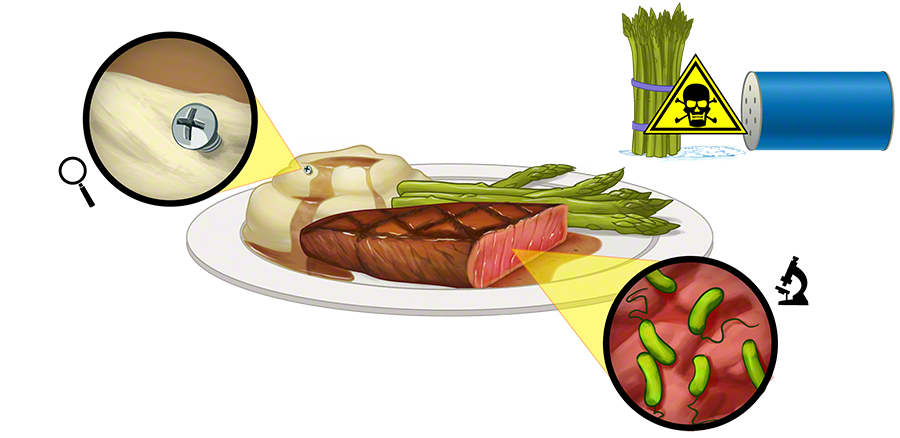
The official website dedicated to discussing food contamination. In this blog, I have included a wide variety of research articles allocated to explore the different types of food contamination in food. These food contaminants are generally considered to be chemical, biological, and physical toxins in food products. These toxic substances can have major health implications and health risks if the world is exposed to these contaminants.
Chemical Contaminants
An article published by ncbi.nlm.nih.gov documents the toxic chemical pathogens that are caused food. Chemical contaminants that enter the food chain are naturally present pathogens that are present in the environment. The highest bacterial pathogens is present in raw foods such as poultry meat. Several bacteria, toxic substances, and parasites inhabit raw foods naturally. The contamination of raw food can occur due to the internal organs of meat animals and the chemical from the animal feed or antibiotic injections given to poultry animals. The infections of the parasite can be transmitted by the fecal-oral route by consuming contaminated food or through living parasites from the environment. Food producing animals can transfer the parasites to others because they themselves are infected. Majority of the food contamination occurs through naturally occurring toxins, transportation of food, and the processing and preparing of food and when it comes to chemical contaminant issues in food.
Contaminants may be present in the food in their raw stages as a result of environmental sources of contaminants. During the transportation of food, common sources of contamination include the vehicle exhausts of diesel and petrol or cross-contamination in the vehicle being used for food transportation. long-distance ships for transport are also often cross-contaminated with chemicals used for disinfection or other sources. In the cleaning phase of food production and preparation, contaminants can invade due to residues left from the disinfectants and and cleaning agents on the surface of food handling equipment.
Biological Contaminants
In the article published by fda.gov, they document the biological contaminants and hazards caused in food. Biological contaminants can become contaminated by bacterial pathogens from process-related hazards, facility-related hazards, hazards, and ingredient-related hazards.
Contaminants may be present in the process-related biological hazards is an issue occurs within the process assembly. If for example, a product needs to be refrigerated and doesn’t get the proper cool is needs, the pathogens could multiply and produced toxic substances during the holding process. Another process-related hazard is if you want to use a (ROP) reduced oxygen packaging to prolong the freshness of a food product, it can provide more toxic substances if pathogens are present and the temperatures are not accurate to keep the food fresh.
Contaminants can be present in sources of facility-related hazards is if the environmental pathogens in the processing environment increases. Examples of these prevalent occurrences if through food handlers and maintenance personnel. This is through improper hand washing from employees , transfer of biological hazards to food through improper handling process, lack of air-filtration to the food such as cooling, drying, and heating, and improper transport for food, such as carts, trolleys and forklifts.
Contaminants in an ingredient-related hazard are contamination of raw ingredients and materials in food. These foodborne pathogens can be split up into three sources of biological hazards; Bacteria, Parasites, and Viruses. The types of ingredient-related hazard in a biological contaminant are, but not limited too: Salmonella, E.coli, Botulism and Listeria monocytogenes.
Foodborne Pathogens- Health Implications
According to healthline.com Foodborne illnesses, or food poisoning affects about one and six Americans every year. There was an estimated 128,000 hospitalizations and 3,000 deaths annually.
Salmonella was one of those outbreaks. It is a bacterium that occurs in the intestine, especially a serotype causing food poisoning. The symptoms of a Salmonella infection are diarrhea, fever, abdominal pain, vomiting, blood, pus, and/or mucus usually appearing up to 12 to 72 hours after the infection according to healthline.com. An estimated of 1,029,000 cases of foodborne salmonellosis occurred annually in the U.S in 2011.
E.coli was another one of the worst outbreaks in the U.S according to healthline.com. E.coli is a bacterium found in the intestines of humans and other animals causing severe food poisoning. The symptoms of an E.coli toxin infection is usually exposed after it has developed over a three to four day period after exposure to the infection. Some symptoms include diarrhea, bloody stools, abdominal pain, vomiting, and occasional fever. An estimated 205,800 foodborne E.coli cases occurred annually in the U.S in 2011
Botulism was another outbreak in the U.S according to healthline.com. Botulism is a serious illness caused by the botulinum toxin. The symptoms of Botulism usually begins within a 18 to 36 hour period after exposure to the infection. Some symptoms include difficulty swallowing, blurry vision, abdominal pain, muscle weakness, and paralysis.
Listeria monocytogenes was another outbreak in the U.S according to fda.gov. L. monocytogenes is a serious infection usually caused by eating food contaminated with the bacterium Listeria monocytogenes. The symptoms of L. monosytogenes are septicemia, meningitis, and encephalitis. Symptoms usually start from 3 days to 3 weeks after consumption of contaminated food. An estimated of 1,600 foodborne L. monocytogenes cases occurred in the U.S in 2011.
Physical Contaminants
In the article published by fda.gov, they document the physical contaminants and hazards caused in food. Physical contaminants can contaminate food by metal, glass, and hard plastic in food.
Contaminants can be present in metal-to-metal contact with food during the processing stage of the product. For example, metal fragments can break off during mechanical cutting and blending operations, and some metal equipment has parts of the machinery that can break of bend off into the food.
Contaminants can be present in glass fragments within the processing stage when ever it involves the use of glass containers. Packaging and handling methods can result in breakage and tear which can leave the food exposed to many types of toxic substances and pathogens. If the consumer is exposed to glass fragment in their food and they ingest it, that can lead to injuries and physical trauma.
Contaminants can be present in hard-plastic as well, when exposed to facility related equipment. Hard-plastic can be introduced into food when equipment such as tools, paddles, buckets, and other breakable materials as they wear down.
Economic Impact
According to an article published by princeston.edu, health costs, distributional costs and effects, producers, lawsuits and fines all effect the economic impact of food contamination. If consumers are affected by these food contaminants, health costs are an important part of an economic impact. These cost are subject to any individual who has been exposed to a contaminant present in the food. The effects of these contaminants can cause death, sickness or illness, depending of the extremities of the contaminant, the amount of food consumed, and the concentration of the contaminated food. Costs would include health care costs for treating sicknesses and illnesses, also burial expenses if the individual died due to the poisonous infection. in addition, costs would include the estimated number of days or years lost from work due to these sicknesses and illnesses.
Distributional costs effect costs and involve people of various different groups and organizations because they are economically affected by the environmental contamination as well. For example, food producers are affected by these contaminants is many different ways. One way is that if food contamination if found at the farm, the food is confiscated and destroyed . Since most farmers are not always reimbursed financially, they face severe hardships economically. If the farmer is unable to provide healthy, fresh crops and livestock, the infectious contamination can lead in a loss of a business for the farmer.
Lawsuits and fines effect the economy because those who were held accountable have to answer to consumers who need compensation for their food contamination incident. according to princeston.edu, most instances for blame for a contamination incident can be established. People who are held accountable are subject to fines and lawsuits because they were responsible for making sure the food is safe to eat for all consumers to eat. Most of the compensation is for economic damages originating from the food contaminant, which results in a loss of employment for the consumer and the sickness or illness the consumer brought with them due to the food contamination.
As a result of all these articles, my call to action was to present data, research and statistics to indicate that food contamination is an issue in the world, and the exposure to food contamination poses health implications and risks for all consumers and buyers. It suggest the chemical, biological, and physical aspect of food contamination and how it affects food products for consumers and society.
Follow My Blog
Get new content delivered directly to your inbox!
 Issues in Food Contamination